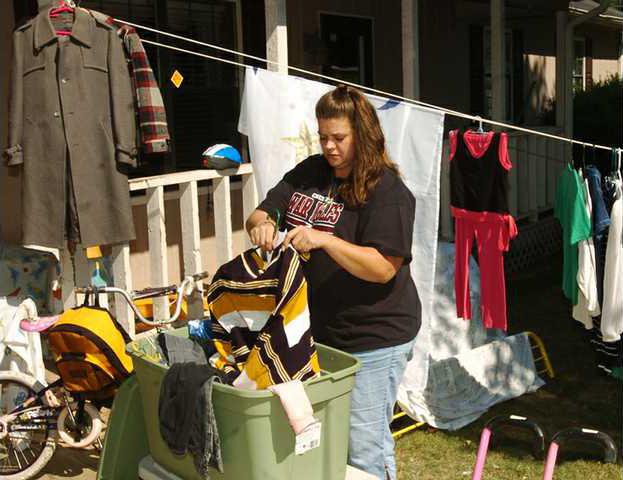
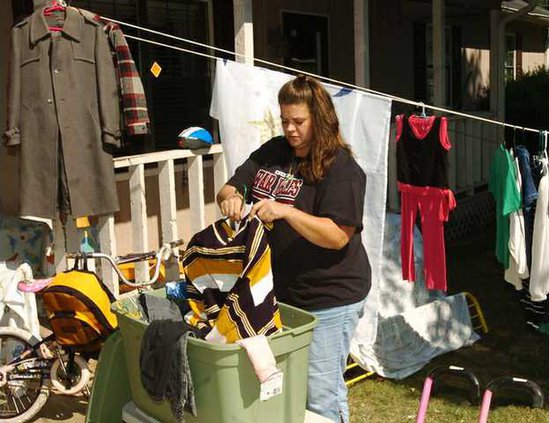
Sherri Brooks spends most of her nights worrying about how she is going to pay her bills. She spends her weekends selling her belongings.
A single mother, Brooks is swimming in debt, recovering from a bankruptcy and trying to find a way to keep her home.
A judge has given the Hall County woman an ultimatum: find $3,000 by Friday or face foreclosure.
If she cannot, Brooks likely will join hundreds of homeowners whose houses are auctioned on the steps of the Hall County Courthouse — a fate that more than 300 homeowners in the county will face on Tuesday.
Inevitably, some of those homeowners will settle with their lenders before their homes make it to the auction block. But the county’s June’s foreclosure filings are still likely the highest of this recession, said Frank Norton Jr., president of the Norton Agency.
The area’s foreclosure rate is so high that the Consumer Credit Counseling Service of Greater Atlanta has had to hire additional counselors to handle the demand, said Scott Scredon, the service’s director of public relations.
Counselors at the agency work around the clock to advise people about their financial situations. Of the 300 counselors employed by the service, 175 are dedicated to housing concerns.
Demand for credit counseling has more than doubled this year, Scredon said. In the past six months alone, 45,000 people have gone to the Atlanta-area service seeking help.
When she bought the four-bedroom home off Dawsonville Highway, Brooks jumped at the idea of an "interest only" payment option for her mortgage. The payments were low and manageable.
But six years later, a monthly expense that was less than $600 when she first purchased the house now is $978. Yet Brooks’ income has stayed the same.
"I was naive," Brooks admits. "I had never bought a house before."
In 2006, Brooks sought bankruptcy protection. To be able to keep her home, Brooks agreed to pay 100 percent of her debt over a five-year term.
Those payments, too, have grown beyond Brooks’ capacity to pay them. After her bankruptcy became final, some of Brooks’ creditors went back to the courts asking to be awarded interest. As a result, her debt repayments rose from $146 to $238 every two weeks, leaving little money to pay the mortgage and utility bills.
The overwhelming sense of helplessness that comes with the threat of losing her home permeates the entire family.
Brooks’ three children, all middle- to high school-aged, went without Christmas presents last year. New school supplies have not been possible for a while.
"They’ve given up a lot," Brooks said. "I have nothing to offer them."
Brooks’ oldest, a successful athlete who is being recruited by several colleges, talks about getting a full-time job to help his mother with the bills. Brooks has so far refused to let her son put his future in jeopardy.
"He gets upset, because I won’t let him quit his sports to go get a full-time job to help pay the bills," she said.
Just last week, Brooks’ teenage daughter had a panic attack and asked her mother how the family would survive their financial crisis.
"I have no answer," Brooks said.
When the family moved to Georgia 11 years ago, Brooks promised that she would not move her children again.
But the reality is that Brooks is on the edge of foreclosure. She watches the newspaper every Thursday to see if her name is listed in the foreclosure filings. Realtors send her postcards almost daily offering the escape of a "short sale."
"It’s mentally draining," she says. "It’s physically wearing me out."
Recent announcements of federal "stimulus" money geared toward struggling homeowners cannot help Brooks. Because she’s in the midst of a bankruptcy, she cannot modify her loan under President Barack Obama’s Making Home Affordable plan.
"Because I’m in a bankruptcy is the only reason why I’m still in the house, because they (the creditors) have to go through all the red tape to get to you," Brooks said. "In the same sense, it ties your hands into getting any kind of real help. That’s what’s so hard, extremely hard."
Brooks still holds onto the hope that she will be able to keep her home until her youngest child graduates high school. But at the same time, she admits the helplessness of her situation.
"I have borrowed. I have grabbed. I have been given. You can’t do it all," she said.
After two bankruptcy filings, what Brooks realizes now is the same thing Frank "Paco" Torch, a certified national instructor for the National Mortgage Learning Foundation, says he has been telling his clients for years — even though, he admits, it is a little harsh.
"I will tell a borrower ‘I don’t think you should buy this house, because you can’t afford it,’" Torch said. "And they don’t want to hear that."
"Everybody isn’t entitled to have a home."
For more than a year, The Norton Agency has tracked foreclosures in Hall County. Norton says approximately one-third of the foreclosed homes in the county are linked to sub-prime mortgages.
June’s filings hit a new high in the county, and Norton said the county’s foreclosure rate will likely stay that way as banks try to clear their balance sheets before the end of the year, Norton said.
"We started really seeing the spike in foreclosures in late 2008 and we think that by the late fall we’ll see it taper back down," Norton said. "What will it be in terms of normal? I think we’ll see foreclosures for a while."
With foreclosure rates skyrocketing and sinking nearby home values, everyone is looking for scapegoats, Torch said. "Sometimes, it is the unscrupulous lenders" who are to blame, but the people who live beyond their means, seeking "the American Dream," are not blameless.
"People are charged up on their credit cards to the hilt, they’re overextended on their mortgages ... today’s instant gratification. Everybody wants everything now — they deserve it — they don’t want to wait. God forbid everybody should have to wait for anything."
There are so many ways it could have been easier — more fair — for Brooks and not the way it is today. Brooks’ child support payments could have come in the mail on a regular basis. The multiple medical emergencies that kept Brooks out of work and required two of her children to have surgery in the same year could not have happened.
But they did and so much depends upon a steady paycheck.
To raise the money to save her home from foreclosure, has started having yard sales on the weekends when she is not working as an insurance underwriter.
"We start on Friday and go all the way through Sunday, hoping," Brooks said.
At last weekend’s yard sale, Brooks said she sold her bed. Its comfort no longer means as much to Brooks now that her sleep is severed by relentless anxiety over her family’s uncertain future.
"I can’t go to bed without thinking, ‘what do I do?’" she said.
"It’s an ultimate grief," Brooks said. "You lose your home, but you’re then homeless. ... It’s just destruction."