Because they’re permitted and regulated, water and sewer treatment plants are easy targets when it comes to addressing water quality.
And more pressure could be on the way with the state Environmental Protection Division’s imminent release of a new water quality plan.
“Not to say there’s not some problems, not to say that we can’t continue to do better, but I think (the plan) that the state’s working on is going to be a real challenge for some communities,” said Kelly Randall, Gainesville’s public utilities director.
The past couple of years, the state has met with representatives from governments that discharge in the Upper Chattahoochee basin, which envelops Lake Lanier, and others in efforts to establish a “total maximum daily load,” or TMDL, the maximum amount of nutrients water can receive and still meet quality standards.
The big concern in TMDL is phosphorus, which, if it enters the lake in excessive amounts, can cause algae growth and lead to environmental problems such as fish kills, lowered water clarity and the potential for toxic algae blooms, the EPD has stated.
Plants are issued pollution discharge permits. Numeric water quality criteria have been adopted for a variety of potential issues, including dissolved oxygen, temperature, bacteria, metals, pesticides and other organic chemicals.
The EPD got approval in May from the U.S. Environmental Protection Agency for revised chlorophyll-a criteria for Lake Lanier.
Chlorophyll-a indicates the level of potentially harmful algae growth in the water, stemming from too many nutrients. Nutrients come from identifiable “point” sources, such as wastewater treatment plants, and less identifiable or “nonpoint” sources, such as farms, septic tanks and lawn fertilizers.
With the federal notification, the state can begin drafting the TMDL, releasing it publicly in the next couple of months, said Elizabeth Booth, manager of EPD’s Watershed Planning and Monitoring Program, in an internal May 5 email.
“It will require point source reductions, as well as nutrient reductions from agricultural and urban lands,” she said.
Cornelia is in between permits at its Water Pollution Control Plant, but plant manager Andy Pilgrim said he isn’t worried about tighter restrictions.
Through a phosphorus removal system, the city is reducing its discharge of the nutrient to about 0.1 milligrams per liter. The city’s new five-year permit, which takes effect today, has a limit of 1.1 milligrams per liter — unchanged from its previous permit.
“Even if EPD comes back and decides they need to lower point-source permits, we should still be in good shape,” Pilgrim said.
Governments throughout the Upper Chattahoochee basin have spent millions on plant upgrades and new technology — none more than Gwinnett County on the F. Wayne Hill Water Resources Center off Financial Center Way in the Mall of Georgia area.
The $1 billion plant is permitted for 60 million gallons per day of sewer discharge, processing about 33 million gallons per day, said Jeff Boss, the Gwinnett County Department of Water Resources’ deputy director for facilities.
The county’s website states that the county puts its water “through a rigorous 11-step process that returns it to an almost pristine state before sending it to discharge points in the Chattahoochee River and Lake Lanier.”
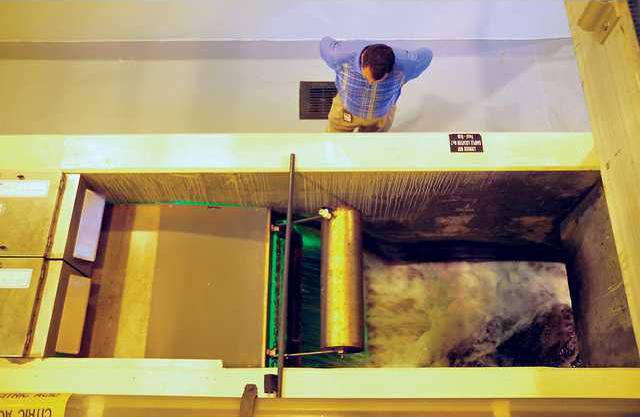
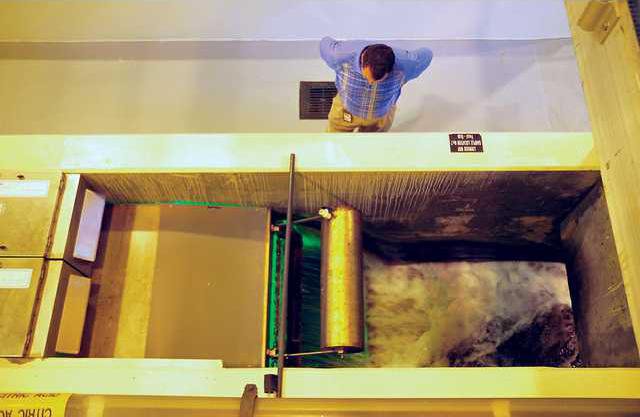
Gainesville’s Public Utilities Department spent $55 million on what was essentially a new treatment plant, Linwood Wastewater Reclamation Facility, which opened in 2008 off Linwood Drive in north Gainesville.
Similar to Gwinnett, but on a much smaller scale, its treatment system uses technology similar to those used in drinking water filtration and removes most of the harmful nutrients in the water, such as phosphorus and nitrogen.
The plant can treat 5 million gallons of sewage per day.
Gainesville also operates a sewer treatment off Old Flowery Branch Road and water treatment plants off Riverside Drive and Jim Crow Road in South Hall. Flowery Branch operates a sewer plant off Ga. 13/Atlanta Highway.
Lula operates the county’s newest plant discharging into the Upper Chattahoochee basin. Located on Magnolia Station Drive, off Ga. 52/Lula Road, the plant is permitted to treat 384,000 gallons of sewer per day.
“The plant has met and exceeded our abilities in removing pollutants from day one,” Lula City Manager Dennis Bergin said.
The plant can treat 1.2 million gallons per day.
“With the economy coming back, we anticipate we’ll probably begin to ask for additional load demand,” Bergin said. “But we haven’t come close to the 384,000.”
Hall County operates Spout Springs Water Reclamation Facility on Spout Springs Road in South Hall, which discharges into the Upper Oconee basin that eventually directs water into the Atlantic Ocean.
The county has built pump stations and pipes that will take sewer from Reunion and Village at Deaton Creek subdivisions and an area surrounding Ga. 211 and Ga. 53 to the Flat Creek treatment plant, said Ken Rearden, Hall County’s public utilities and public works director.
That move would free up capacity in the Spout Springs plant to serve the Ga. 347/Friendship Road area.
The county has completed building pump stations and lines in the Gateway Industrial Centre off Ga. 365 in North Hall and another pump station in the area across the road at Gateway Village, a planned 476-acre mixed-use development.
“All of the treatment plants are permitted … with stringent phosphorus and nutrient removals, so the water going into Lanier, the Chattahoochee (River) or (Upper Oconee) is as good or better than the way that’s already in that creek or river,” Rearden said.
“The EPD wants to make sure we manage our waters properly.”
Flowery Branch has embarked on a $2 million project to divert wastewater from the Cinnamon Cove condominium complex on Gaines Ferry Road to the city’s treatment plant.
The projected completion date is spring 2016.
Flowery Branch has a permit to discharge 400,000 gallons of treated water daily into Lake Lanier. To go along with that, the state limits the city to 158 pounds of phosphorus annually.
Acquiring the Cinnamon Cove plant gives the city an extra 107 pounds of phosphorus, expanding the city’s ability to provide sewer service for future development.
Despite all their efforts, pipes fail and leaks occur.
Flowery Branch had to spend $49,000 earlier this year to repair a sewer line that had been leaking into Mud Creek for an undetermined amount of time.
A study by EPD shows that since May 2012 there were 19 incidents in Hall County in which a violation occurred and a monetary settlement was reached. The total amount of fines during that time was $83,085.
During that time, Gainesville has had two violations with total fines of $16,895.
Randall recalled far darker times for the city.
When he started in 1987, sewage overflows were so bad that the state “wouldn’t even allow us to tie on additional houses,” he said.
“The city stepped up and did what it needed to do to fix the problems it had with the sewer system, and today we really have a shining star,” Randall said. “People don’t believe me when I say we don’t have overflows, but we just don’t.”